In this three-part series, I explore what stress really does to us - in the body, the brain and our hormones - and how sound therapy and meditation can gently support recovery.
Blending modern neuroscience with lived experience, these articles are designed for anyone feeling overwhelmed, tense or exhausted by the demands of everyday life. Each part can be read on its own, but together they build a clearer picture of how sound and meditation don’t just help us relax - they help us heal.

by Clare Savory, Feeling Sound
Part 1 - Stress and the Body: What Stress Does to the Body (and How Sound Meditation Helps)
Stress isn’t just something we feel in our minds - it lives in our bodies.
If you’ve ever searched “what does stress do to the body” or wondered “where stress is stored in the body”, you’re not alone. Many people feel stress long before they consciously recognise it as stress: in tight shoulders, clenched jaws, shallow breathing, digestive issues, headaches or poor sleep.
In modern life - especially in some of the jobs with the most stress - our bodies are under constant pressure to perform, respond and stay alert. Our bodies often don’t get the chance to properly recover. Over time, this takes a toll on both our physical and mental health.
This is where meditation and relaxation, and in particular sound healing and sound bath therapy, can offer powerful, science-backed support.

What Does Stress Do to the Body?
A LOT. To really understand how stress shows up in our bodies, it helps to know a little about our autonomic nervous system - the part of us that quietly runs the show in the background.
One branch of this system is known as the sympathetic nervous system, more commonly referred to as fight, flight, fawn or freeze. This is our built-in survival response. It’s brilliant in an emergency…less brilliant when it’s switched on all day, every day.
The constant demands of modern day life ensure that this switch is hardly ever in the off position. Emails, notifications, deadlines, responsibilities and emotional load - it all adds up. And the scary thing is, we don’t even notice it happening until it’s too late and our bodies are screaming at us from the inside out that they are struggling to return to balance because of the effects of stress.
And so - our sympathetic nervous system springs into action! Physically, that can look like:
pupils dilating
heart rate increasing
blood pressure rising
breathing becoming shallow
At the same time, stress inhibits many of our internal systems - especially those involved in rest and digestion. The pancreas, digestive system and gall bladder all take a back seat. We even produce less saliva, which explains that dry mouth feeling before a presentation or interview!
Stress can also show up as:
headaches
muscle aches and pains
excessive sweating
constipation or heartburn
changes in appetite or weight
rashes or skin conditions
And perhaps most commonly of all, a deep sense of exhaustion. Some people find they sleep far more than usual, others can’t sleep at all. Either way, the body feels drained - like it’s constantly running on empty.
If any of this sounds familiar, you’re not imagining it. This is how stress affects the body when it’s left unchecked.
Understanding how stress affects the body is key to understanding why relaxation meditation is so important - not as a luxury, but as a real necessity.
How Does Sound Therapy and Meditation Help Ease Stress in the Body?
Sound therapy and meditation gives the body permission to switch gears.
When we engage in deep relaxation practices like sound meditation or sound bath therapy, we activate the parasympathetic nervous system, often called rest and digest.
This is the state where true healing happens.
Physically, the body begins to:
lower blood pressure
reduce heart rate
recover more quickly from stress
relax more easily and more often
As the nervous system settles, we often notice:
muscle tension easing
aches and pains softening
deeper, more restorative sleep
improved digestion
more stable energy levels
Spending more time in this parasympathetic state also supports the immune system, because the body finally has enough space and energy to focus on recovery and repair.

Meditation, Energy and the ‘Better Than Coffee’ Effect
Here’s a fascinating (and cool!) bit of science for you.
Just 15 minutes spent in a slower, deeper meditative state - known as the theta state - can help replenish our potassium and sodium stores. These minerals play a crucial role in energy production and muscle function and are often depleted when we’re stressed.
In real-life terms?
That mid-afternoon slump can ease, energy levels lift and the body feels more replenished - often without reaching for another coffee.
Studies have also shown that even short periods of sound-based relaxation can lower stress hormones, reduce muscle tension and support emotional regulation.
This is why many people describe sound baths as feeling both calming and physically relieving.
Sound therapy and meditation aren’t about escaping the body. They are an opportunity to reconnect with it - to listen, notice and acknowledge what’s needed in that moment.
Sometimes that’s rest. Sometimes it’s release. Sometimes it’s simply just stopping long enough to realise what our bodies need in that moment.
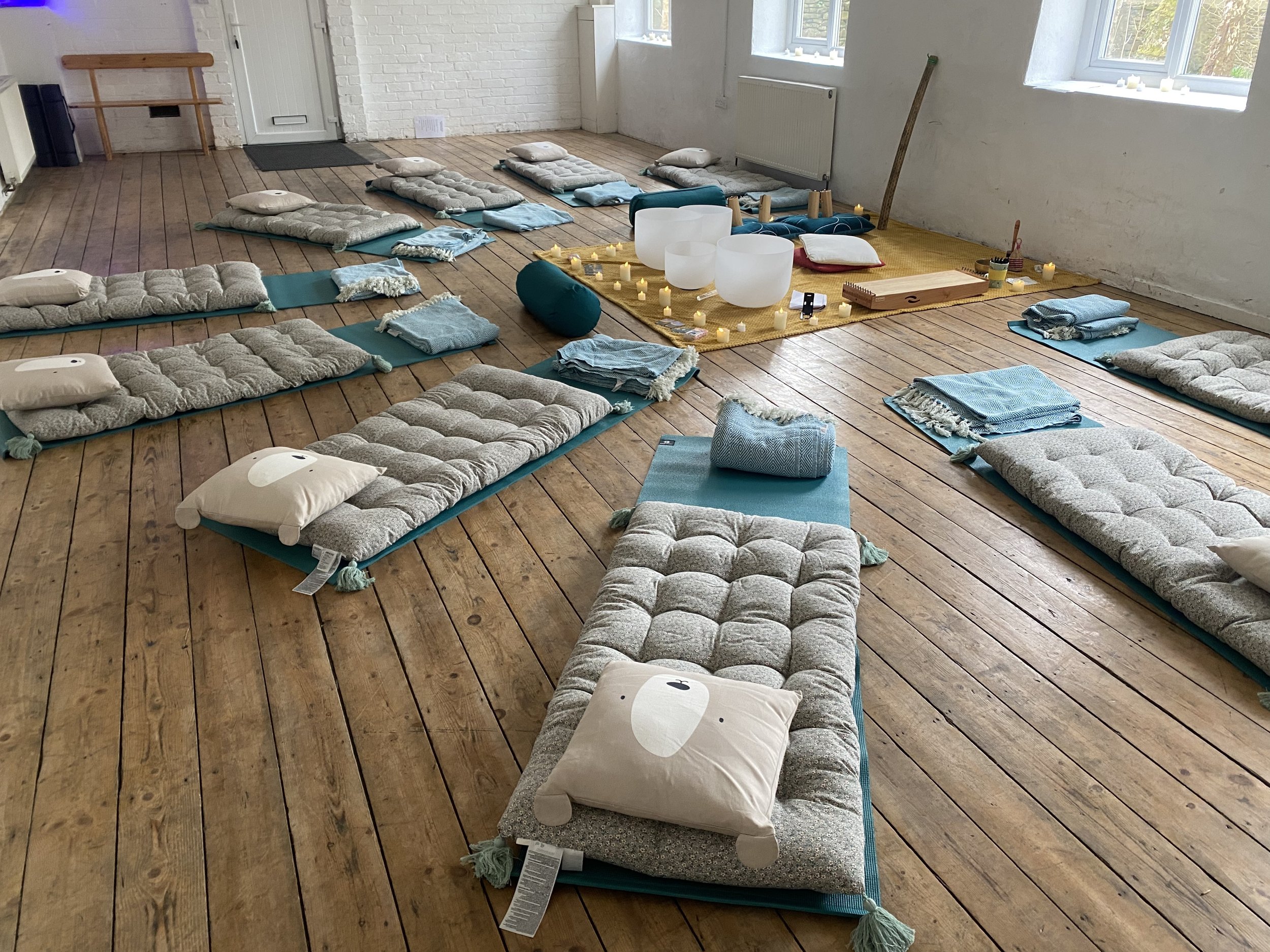
Relaxing Meditation for Stress Relief (Without the Effort!)
For people who find traditional meditation challenging (anyone else planning their weekly food shop in their head?!), sound meditation can feel more supportive and less demanding.
You don’t need to:
sit cross-legged
focus on your breath
‘empty your mind’
Instead, sound baths create a space for guided relaxation meditation for sleep and stress relief, allowing your nervous system to do the work naturally.
This makes sound healing especially helpful for people experiencing:
anxiety
burnout
chronic stress
poor sleep
Try This for Yourself: Relaxation Meditation Music
Before reading on, I’m going to invite you to experience a short moment of sound-supported relaxation.
Find a comfortable position, allow your eyes to close if that feels safe and simply listen. This is an example of relaxing meditation music designed to support nervous system regulation and deep rest. Notice how your body responds. FYI: there’s no right or wrong way!
Sound Healing, Sleep and Deep Rest
Many people use relaxation meditation music and relaxation meditation for sleep to help the body wind down in the evening.
Sound-based relaxation can:
quiet racing thoughts
support melatonin production
ease physical tension
prepare the body for restorative sleep
This is why sound therapy is often used alongside guided relaxation meditation for sleep, both at home and in group settings.
Coming Up in Part 2…
Stress and the Brain
In the next part of this series, we’ll explore stress and the brain - including why stress fuels anxiety, how the amygdala responds to pressure and how meditation and sound therapy help calm the mind.
Whatever it is, the way you tell your story online can make all the difference.
Sound Therapy and Meditation in Glossop and the High Peak
If you’re local to Glossop or the surrounding Peak District, you can experience this kind of deep meditation relaxation therapy in person.
I offer sound bath therapy sessions, meditation and relaxation classes near me, designed to support stress relief, nervous system regulation and deep rest.
