Why Every Athlete Should Meditate
Every runner has a training plan. Almost none of them train their mind.
Me included, because with a triathlon and a few 10k races under my belt, I didn't make time to plan meditation or building mental stamina into my plan either.
It’s that time of year. The spring race entries are in, the training plans are printed (or downloaded, or colour-coded in a spreadsheet — you know who you are). Whether you’re building up to a 10k, somewhere in the middle of a marathon block, or eyeing up a triathlon this summer — this is the season where the miles pile up and the pressure quietly does too.
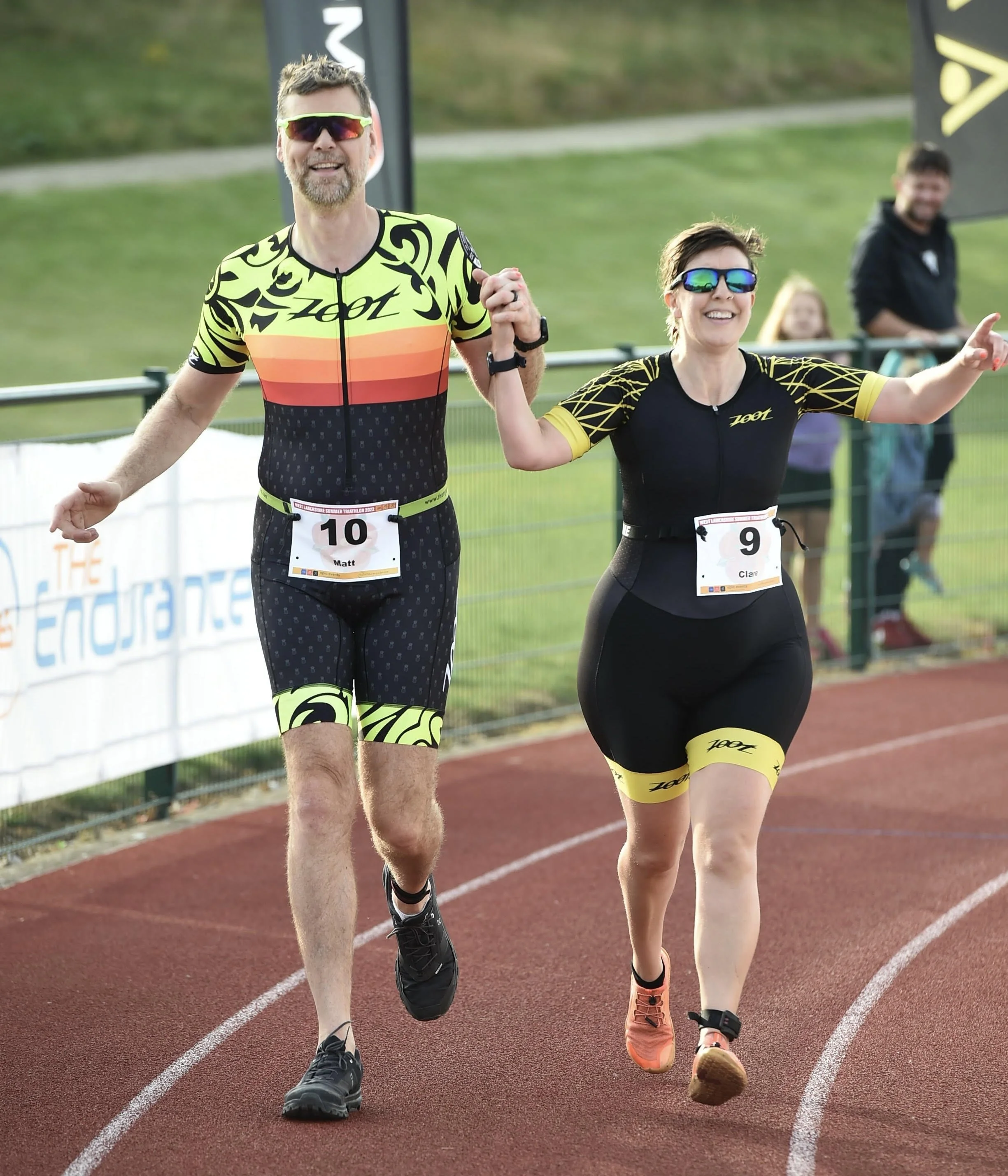
Feeling Sound’s Clare Savory and husband Matt complete a sprint triathlon together in August 2022!
So, you’ve done the training plan. You’ve nailed the nutrition. You’ve got the kit (because of course you have). But somewhere between all that doing, pushing and optimising — is there any space left to just... be?
I ask, because I live with a triathlete and marathon runner. And I’ve watched, with great affection, the hours of prep, the meticulous logging, the slightly obsessive relationship with a GPS watch. What I’ve also noticed — gently, from the sofa — is that the mental side of training often gets the least attention of all.
And yet it might be the thing that makes the biggest difference.
It's something me, and my husband Matt have been working on secretly behind the scenes as he gears up to take on the London Marathon next month! A quiet and consistent practice to slowly build up mental stamina, alongside the physical training and nutrition plan.
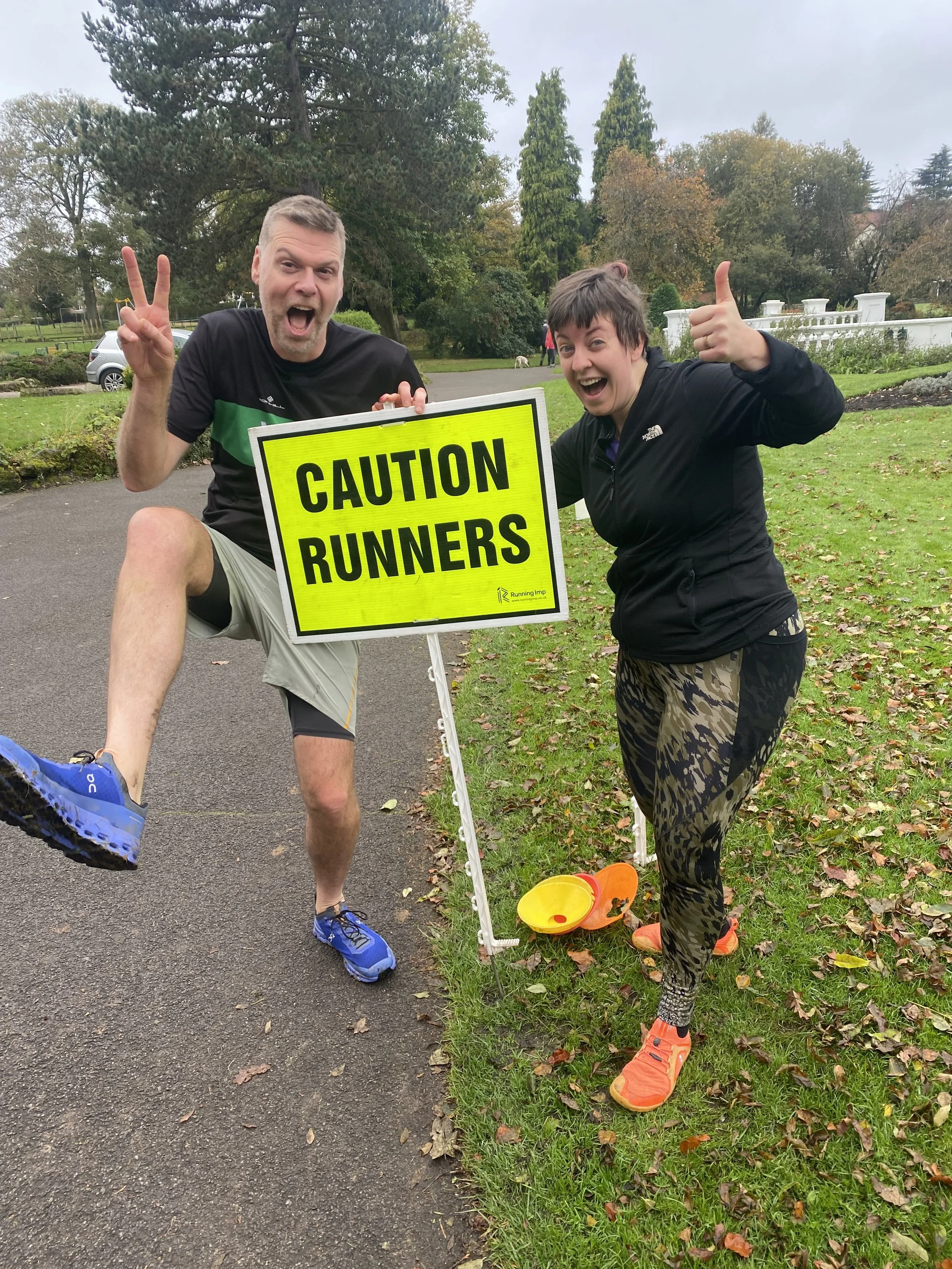
Early on a Saturday morning, two crazy Glossopians prepare to take part in ParkRun whilst on holiday…
But I’m Not the ‘Meditate on a Mountaintop’ Type
Good. Neither are most of the athletes I work with.
Meditation doesn’t require candles, incense or an empty mind. It doesn’t ask you to sit cross-legged for an hour or chant anything (unless you want to — no judgement here).
What it does ask is that you give your nervous system a proper chance to recover. Not just from the physical load of training — but from the mental and emotional load of modern life that sits on top of it.
Because here’s the thing most training plans don’t talk about: your body can only adapt and grow stronger during rest. And rest isn’t just sleep. It’s the quality of your recovery — and that starts in your nervous system.
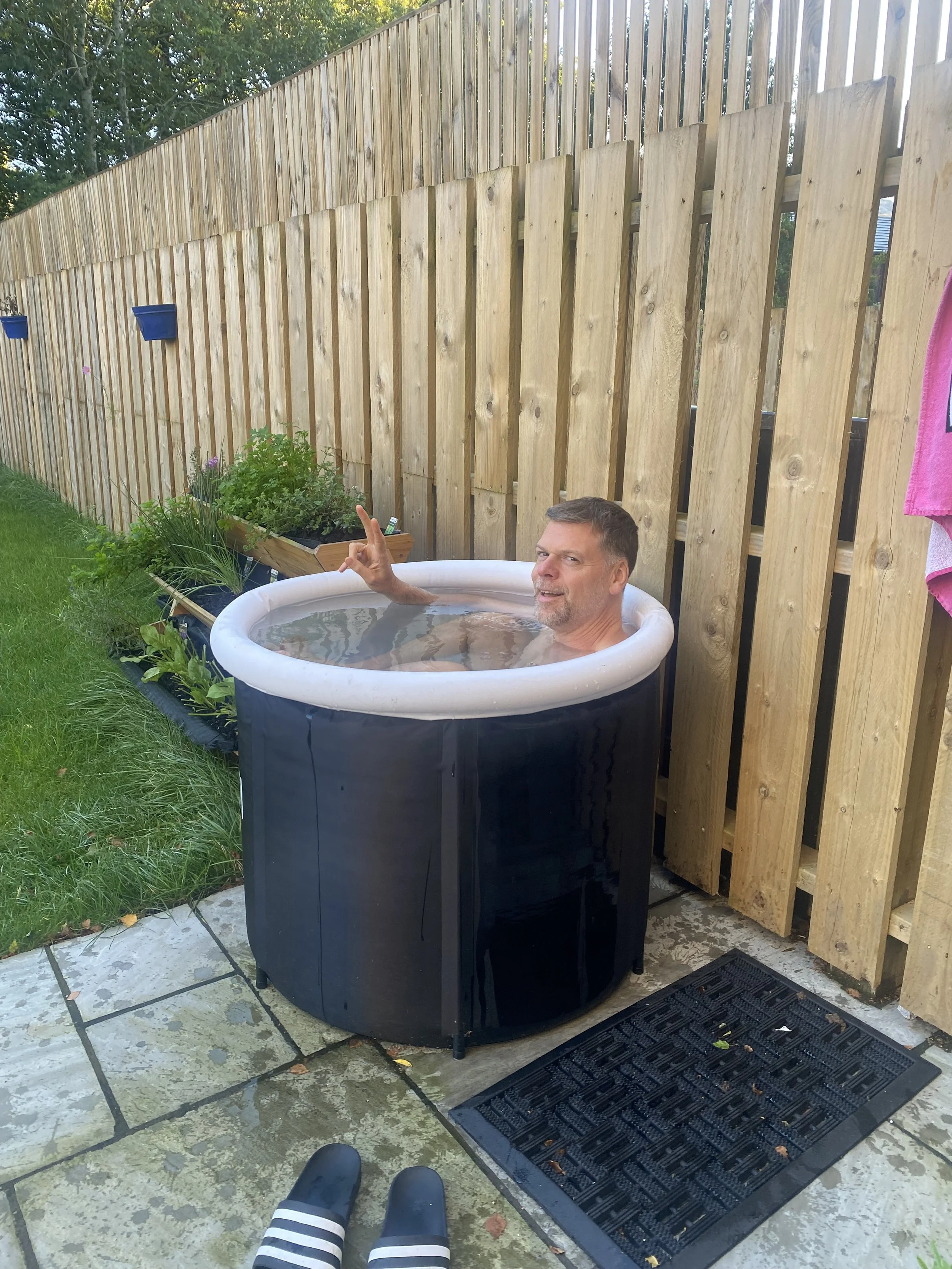
Matt’s post-run recovery includes an ice bath…(he has got his trunks on, honestly!)
The Athlete’s Nervous System (and Why It’s Probably Stuck in the Wrong Gear)
If you’ve read my previous posts on stress, you’ll know I’m a bit obsessed with the autonomic nervous system. Bear with me, because it’s genuinely fascinating — and incredibly relevant to anyone who trains.
We have two main modes:
Sympathetic nervous system — fight, flight, fawn or freeze. The ‘go’ state.
Parasympathetic nervous system — rest and digest. The ‘recover’ state.
Training — especially high-intensity training — is a sympathetic activity. Your heart rate spikes, cortisol rises, your body is in full performance mode. Which is exactly what you want, when you’re doing it.
The problem is when we add a demanding job, a busy family life, poor sleep, financial stress and relentless notifications on top of that training load. Suddenly the nervous system never really gets to switch off. It stays in sympathetic mode — on alert, on guard, always ‘on’.
Sound familiar? That permanently-wired, tired-but-can’t-switch-off feeling? That’s not weakness. That’s a nervous system that’s never properly been given permission to rest.
What Meditation Actually Does for Athletic Performance
Let’s get into the good stuff. Because the science here is genuinely impressive.
1. It accelerates recovery
When we meditate, we activate the parasympathetic nervous system — the state where the body actually repairs itself. Heart rate drops, blood pressure lowers, cortisol begins to fall. Muscles that have been working hard finally get the signal that it’s safe to recover.
Research shows that just 15 minutes in a deeper meditative state — known as theta — can help replenish potassium and sodium levels that are depleted by intense exercise. In real terms: less muscle fatigue, more efficient recovery, and that mid-afternoon slump easing without reaching for another coffee or gel.
2. It reduces cortisol — by a lot
Cortisol is your stress hormone — and while you need some to perform, chronically elevated cortisol is the enemy of adaptation. It suppresses the immune system, disrupts sleep and slows the body’s ability to repair tissue.
Regular meditation has been shown to reduce cortisol levels by up to 30%. For context, a good night’s sleep reduces cortisol by around 10–12%. Let that sink in for a moment.
3. It sharpens focus and mental resilience
Ever hit a wall mid-race and noticed that the battle is more mental than physical? That’s your amygdala — the brain’s threat-detection centre — going into overdrive.
Neuroscience now shows us that regular meditation literally reduces the size of the amygdala over time. Less reactivity. Less panic when it gets hard. A quieter inner voice telling you to stop. Many elite athletes — from ultramarathon runners to Olympic swimmers — use mindfulness and visualisation as a core part of their training. Not as an add-on. As a non-negotiable.
And it’s not just anecdotal. A 2024 study in the Journal of Sports Sciences found that athletes with meditation experience showed significantly better endurance performance and cognitive function when mentally fatigued, compared to those without. In other words — when it gets hard and your brain wants to quit, meditation experience is what keeps you going.
4. It improves sleep quality
We all know sleep is where the magic happens for athletes. But a wired nervous system doesn’t just switch off at bedtime because you want it to. Racing thoughts, restless legs, waking at 3am running through tomorrow’s session… sound familiar?
Meditation — particularly sound-based relaxation — has been shown to support melatonin production and guide the brain into the slower delta and theta brainwave states that precede deep, restorative sleep. It’s not a sedative. It’s a reset.
A 2025 study in Scientific Reports looked specifically at professional fencers who completed 20 weeks of mindfulness meditation training. Not only did their attention, concentration and focus improve measurably — their salivary cortisol levels dropped significantly too. Better sleep, sharper mind, lower stress hormones. All from meditation. Not bad for 20 minutes, three times a week.
5. It changes your stress baseline for good
This is the one that really gets me excited. Research on long-term meditators shows something called ‘trait effects’ — the idea that regular practice doesn’t just help in the moment, it actually lowers your baseline stress response over time.
Everyday stress feels less intense. Hormonal reactions are less extreme. Recovery happens faster — not just physically, but emotionally too.
For an athlete, that means showing up to training and race day with a calmer, more regulated nervous system. Not because life got easier — but because you did the inner work.
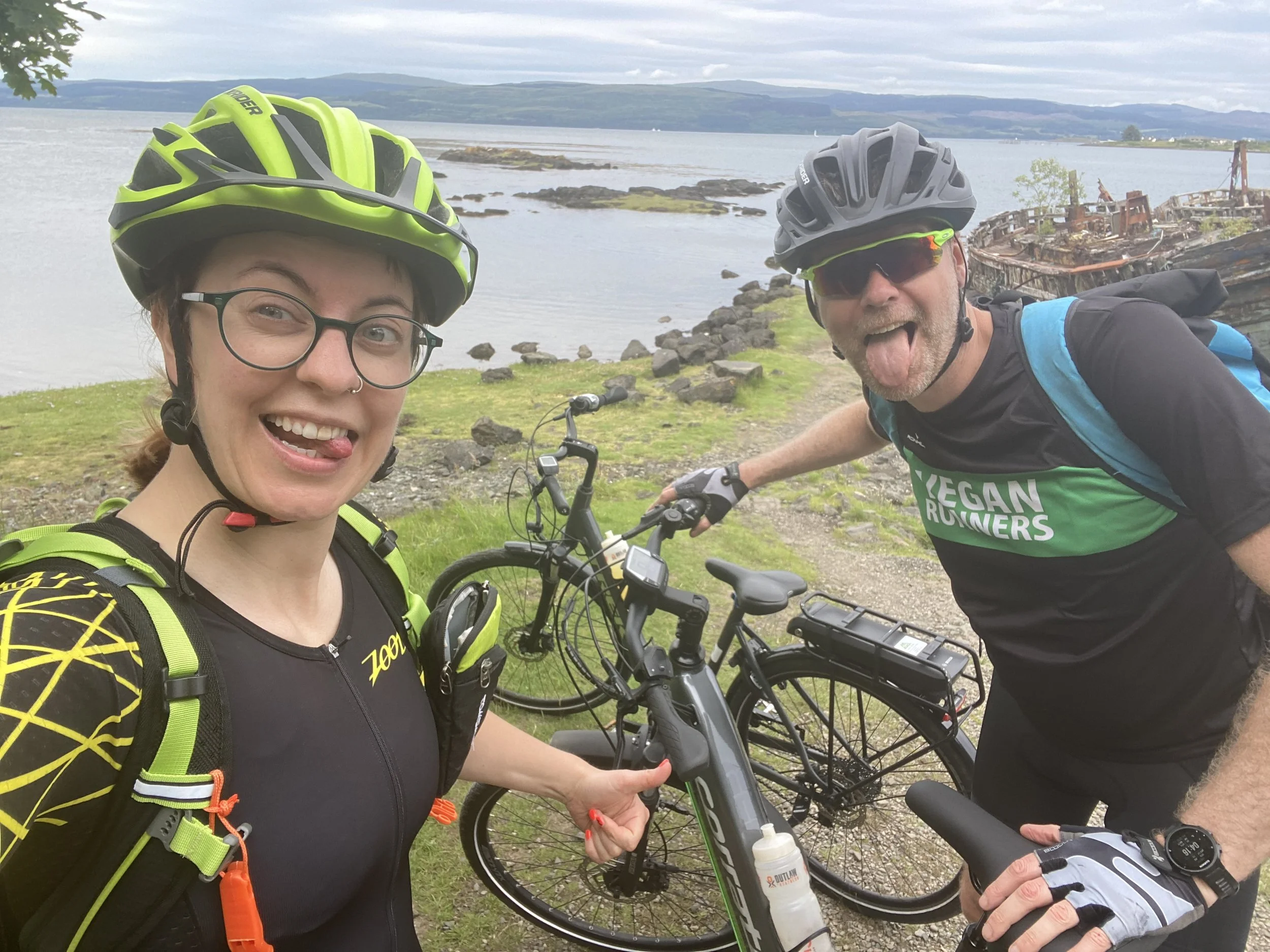
Mountain e-biking on the Isle of Mull in 2023, to top up Matt’s mileage for his next triathlon!
You Don’t Need an Hour. You Need a Practice.
I know what you’re thinking. ‘Clare, I’m already fitting in 5am runs and back-to-back brick sessions. When exactly am I supposed to meditate?’
Fair point. And here’s my honest answer: you don’t need an hour. You need ten minutes and a bit of consistency.
A JAMA Network Open clinical trial found that just 10 minutes of daily meditation over 8 weeks significantly reduced stress, burnout and anxiety. That’s a cool-down playlist. That’s the time it takes your recovery shake to go down.
Meditation can weave into the gaps you already have:
The 10 minutes after a run before you reach for your phone
A body scan before bed to help your nervous system downshift
A sound bath session once a week as an active recovery tool
Visualisation during a long, easy effort — mentally rehearsing race day while your legs do the work
The Bit Where I Get Honest
I’m not going to pretend meditation is a magic performance pill. It isn’t. And it won’t replace good coaching, quality sleep or the training itself.
But what I’ve seen — in myself, in the people I work with, and in the research I keep coming back to — is that the athletes who build in proper mental recovery alongside their physical training tend to have more longevity, fewer injuries, better race-day performance and — crucially — they seem to enjoy it more.
Because you can be incredibly fit and still be running on empty.
Meditation is one of the tools that helps fill the tank back up.
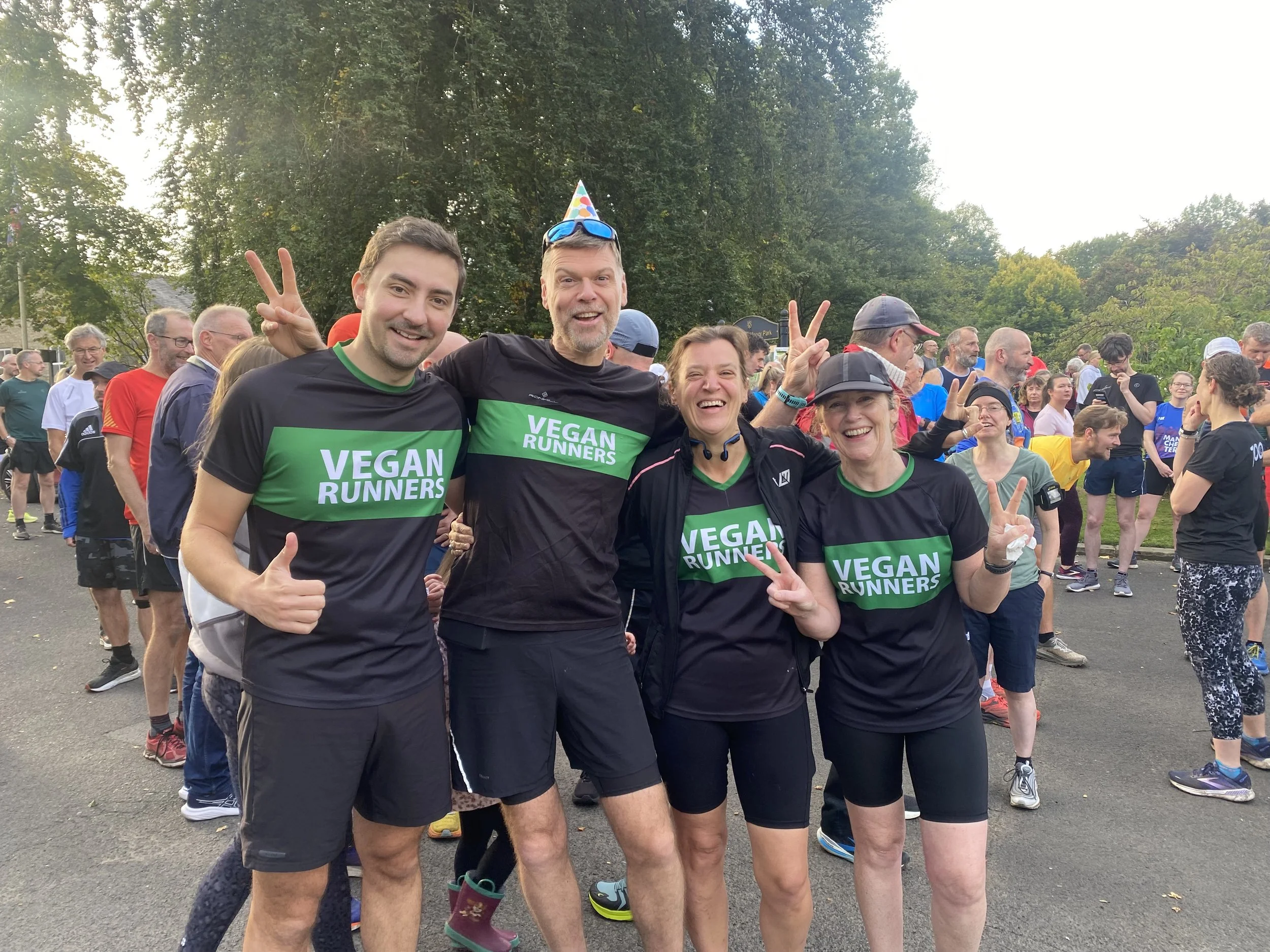
Life is better together, a pleasure to be part of a wonderful community such as Manchester Vegan Runners!
Want to Try It for Yourself?
If you’re local to Glossop or the Peak District, my sound bath and guided meditation sessions are a brilliant starting point — especially if you’ve never meditated before and the idea of sitting quietly with your own thoughts feels about as appealing as an ice bath. (Although, knowing athletes, that might actually be fine.)
I teach guided beginner meditation classes to help you find a personalised, flexible and adaptable practice that works for you, and your training.
You don’t need any experience. You don’t need to be ‘good’ at it. You just need to book on to one of my drop-in meditation sessions, and show up.
That’s the whole thing, really. Just show up. The rest takes care of itself.
Good luck racing!
