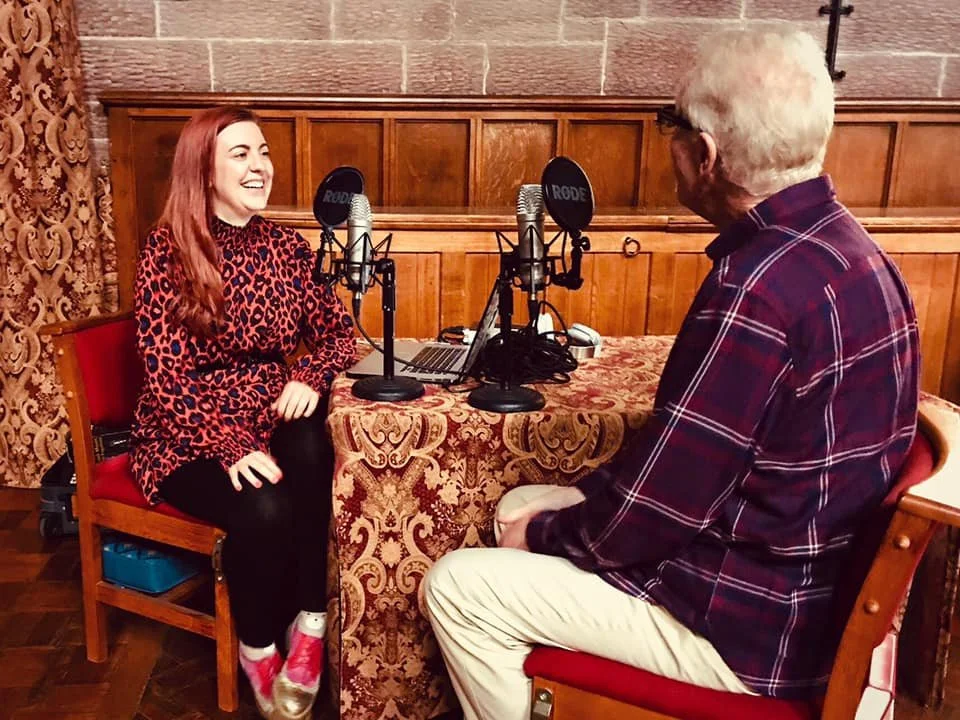
If you've been curious about sound baths, sound therapy or meditation — but not quite sure where to start — March was a brilliant month to discover our Feeling Sound podcast. We launched with two episodes that dig into the science behind rest and nervous system regulation, and they've already sparked some brilliant conversations in our sessions across the Peak District.
Here's a roundup of what we covered, plus some of the research, books and free resources mentioned along the way.
You can listen to our podcast on Apple Podcasts, Spotify, Amazon Music or wherever you get your podcasts.
Transcripts are available on the embedded players below.
Episode 1: You've Forgotten How To Rest. Here's Why.
Published: 23rd March 2026
Do you ever feel like you know you need to slow down — but you genuinely don't know how? That's exactly where this episode starts.
In our very first episode, Clare walks (literally — she records on her evening walks across the Peak District moors) through one of the most common things she hears from people who come to her sound bath and meditation sessions: they've forgotten what real rest feels like. Not the collapse-on-the-sofa-with-your-phone kind of rest. Proper, restorative rest.
To explain why so many of us struggle with this, Clare uses one of her favourite analogies: the five gears of a car. Each gear represents a different brainwave state, and most of us spend our lives stuck in fourth gear — what neuroscientists call beta — without ever really visiting the slower, more restorative states our brains and bodies actually need. If you'd like to go even deeper on this, our blog post Can't Switch Off To Sleep? Your Brain Might Just Need Shifting Gear covers the full science of brainwave states and includes a free 30-minute sleep recording.
The brainwave states explained:
Gamma (5th gear): associated with hyper-focus and advanced meditative states — not somewhere most of us visit often.
Beta (4th gear): our everyday working, thinking, doing state. Essential, but exhausting if we never leave it.
Alpha (3rd gear): relaxed wakefulness — a slow walk, gazing out of a window, that Sunday morning cup of tea.
Theta (2nd gear): the dreamy, creative, deeply restorative state associated with meditation and sound baths. Just 15 minutes in a theta state has been shown to replenish potassium and sodium stores in the brain.
Delta (1st gear): deep, dreamless sleep — where the body truly repairs and restores itself.
Clare also introduces the research around the amygdala — the brain's stress and fear response centre — and shares the landmark finding that eight weeks of daily meditation practice has been shown to shrink it. In other words, you can structurally change your brain and your stress response in just two months.
If this episode has piqued your curiosity and you'd like to explore meditation in a safe, guided, beginner-friendly setting, Clare runs fortnightly drop-in meditation classes in Whaley Bridge and Old Glossop from just £12.50, as well as beginner courses online. No experience needed — that's exactly what they're designed for.
Free Feeling Sound resources mentioned:
Free 30-minute delta brainwaves sleep recording within one of this month’s blog posts.
Free mini sound bath recordings — a collection of free 3-minute sound bath recordings featuring Himalayan bowls, gongs, crystal bowls and more. Perfect for a quick reset whenever you need it.
Episode 2: Fight, Flight or Flow: How Sound Shifts Your Nervous System
Published: 30th March 2026
You might have heard the phrase 'nervous system regulation' floating around the wellness world lately. But what does it actually mean — and what has it got to do with a sound bath?
In episode two, Clare breaks down the science behind the two key states of our autonomic nervous system in a way that's genuinely easy to understand.
The two nervous system states:
The sympathetic state (fight, flight, fawn or freeze): Our stress response — heart rate up, blood pressure rising, immune system partially shutting down. Not inherently bad (we need it to function), but deeply damaging when we spend too much time there.
The parasympathetic state (rest and digest): Where we recover, restore and genuinely relax. The goal isn't to live here permanently — it's about balance between the two.
For a really thorough deep dive into what stress actually does to the body — including the physical symptoms most people don't realise are stress-related — our science-backed blog series Stress, the Body and the Mind is a great companion read to this episode.
Clare also explores how sound and music can help us move between these states — explaining the difference between low frequencies (which tend to ground, calm and stabilise) and high frequencies (which can uplift and energise), and how a well-crafted sound bath uses both.
She references the work of Dr Daniel Levitin — neuroscientist, guitarist, and author of ‘Music as Medicine’ — whose research found that listening to just 15 minutes of your favourite music can boost dopamine and serotonin, and activate the body's own natural healing response. The key? It has to be music you genuinely love. Your own personalised medicine playlist.
The episode closes with Clare's own story — going from a baseline stress level of 7/10 to around 3/10 through years of consistent practice — and an introduction to Dr Herbert Benson's relaxation response, which showed that regular meditators naturally spend more time in a relaxed alpha brainwave state day to day.
If this episode has made you want to experience nervous system regulation for yourself, Clare's guided meditation sessions are a brilliant place to start. Grounded in neuroscience, trauma-aware, and designed for complete beginners — sessions run fortnightly in Whaley Bridge and Old Glossop, and online.
New to Feeling Sound?
Clare Savory is an accredited sound therapist and meditation teacher based in the Peak District, with over 20 years of experience. She holds regular sound bath and guided meditation sessions in Glossop, Whaley Bridge and the surrounding area, and works with clients online too.
You can explore free guided meditations, mini sound baths and a 30-minute delta sleep recording at FeelingSound.co — and find the podcast on Apple Podcasts, Spotify, Amazon Music or where ever you get your podcasts.
New episodes drop every Monday. We'll be back with a roundup of April's episodes — which go even deeper into sound bath instruments, meditation techniques and the neuroscience of habit formation — very soon.
