Thanks for signing up to our Feeling Sound newsletter!
Now Then - Here Are Five Ways To Calm The Anxiety Spiral
A guide to coming back to the present moment when your mind runs away with itself
Have you ever had a difficult day and found your mind running away with itself long after the moment has passed?
Most of us know that feeling. A throwaway comment. A difficult conversation. A moment that didn't go the way you hoped. And then — almost before you notice — your mind is off. What if they're right. What if I'm not good enough. What if everyone else has been thinking this and just hasn't said it.
I know this one first-hand — and I'm still working with it. Knowing the tools and remembering to use them when you're hurt are two very different things. This guide is for both of us.
What if is imagination wearing the costume of preparation. And it has a measurable effect on the brain.
When we catastrophise, the amygdala — the brain's threat-detection system — fires as if the danger is real and present. It suppresses the prefrontal cortex: your rational, clear-headed self goes offline at the exact moment you need it most. This is amygdala hijack. But here's what the neuroscience also tells us: a consistent meditation practice can physically shrink the amygdala over time. A Harvard study found measurable structural brain changes after just eight weeks of mindfulness. You can literally rewire your stress response.
I've been building my toolkit for a decade. These are the five things I come back to, every single time.
Five ways back to what is
1. Mindfulness - sit with what's actually here
Even two minutes of watching your breath makes a real difference. Follow the in and out — notice whether you feel it in your chest or your belly. You don't need to empty your mind. You just need to notice it's wandered, and gently bring it back.
That noticing is the practice.
The science: Regular mindfulness increases grey matter in the prefrontal cortex and reduces activity in the default mode network — the neural home of the rumination loop.
2. Contemplation - give your attention somewhere to land
Find something physical and real. A stone, a leaf, a cup of tea. Notice its texture, its weight, its temperature — without making it mean anything. The senses bypass the thinking mind entirely. They're the fastest route back to the present moment.
The science: Sensory focus interrupts the default mode network. Higher activity in this network is directly linked with lower wellbeing and higher anxiety.
3. Hum or chant - let your breath do the work
You don't have to sing. A slow, steady hum on a long out-breath is enough. Try it in the car. Hum along to the kettle. Find a note and stay with it for a minute. See what shifts.
The science: Elongating the out-breath through humming directly activates the parasympathetic nervous system. It reduces cortisol and boosts GABA — the brain's natural calming neurotransmitter.
4. Listen - let sound meet you where you are
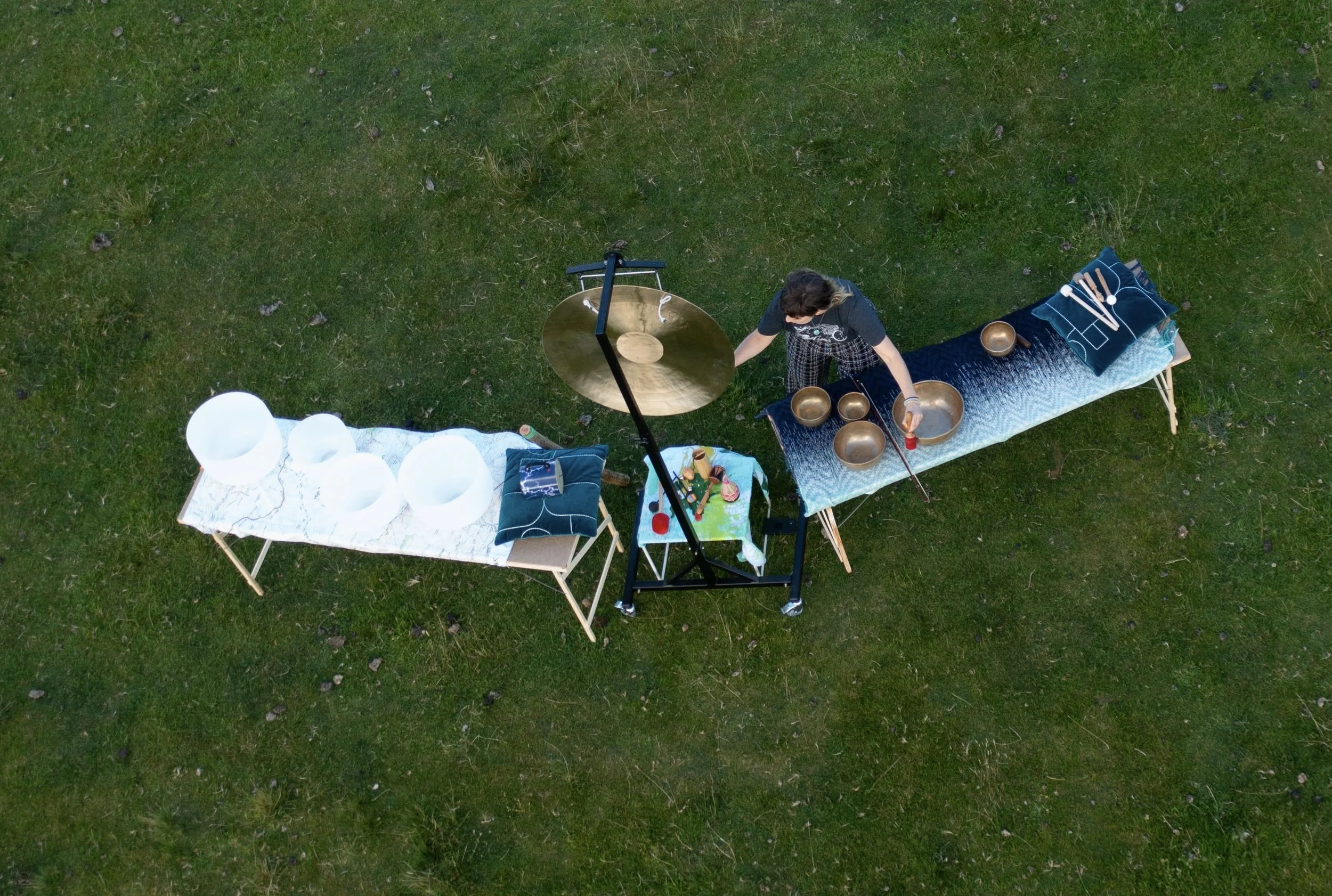
On the days when sitting still feels impossible, sound can do the work for you. I have free three-minute mini sound baths, a full gong bath recording, and a 30-minute sleepscape with binaural beats on my website — all free, no sign-up needed.
Pop your headphones in and let it do what it does.
The science: Sound bath listening shifts brainwave activity from beta — alert and anxious — toward alpha and theta states, associated with deep relaxation and open awareness.
5. Move - walk until your feet become ears
Get outside. Notice the season — what's changed since you last really looked. What's flowering. What the light is doing. Let your attention move outward rather than inward. Pauline Oliveros (1932-2016) was an American composer and musician who pioneered the practice of Deep Listening — a way of paying close attention to every sound around you, as a path to presence and calm. She wrote: walk so quietly that the bottoms of your feet become ears.
The science: Walking in nature reduces activity in the prefrontal cortex region associated with rumination, while increasing serotonin and endorphins.
What people say
Here's what people in the Feeling Sound community are sharing about how sound therapy and meditation are helping them reduce anxiety, manage stress, and find their way back to themselves.
“I've been so low for so long — but this has given me a boost and a real sense of inner peace and calm. I felt a shift in energy. I feel like I've got a bit of fire in my belly again.”
- Laura, Feeling Sound community
Sound restoring something deeper — not just quietening the mind.
“An absolutely amazing sound bath experience — magical, soothing, and deeply relaxing. What have you got to lose... apart from the stress you bring with you?”
- Simon, Feeling Sound community
What have you got to lose — apart from the stress you bring with you?
“As someone who struggles with anxiety, this really resonated. A mindfulness course alongside yoga and sound baths are helping me be less reactive and more present.”
- Sonia, Feeling Sound community
Less reactive. More present. That's exactly what we're building.
Listen for free
Three-minute mini sound baths, a full gong bath recording, and a 30-minute sleepscape with binaural beats.
Who is Clare Savory?
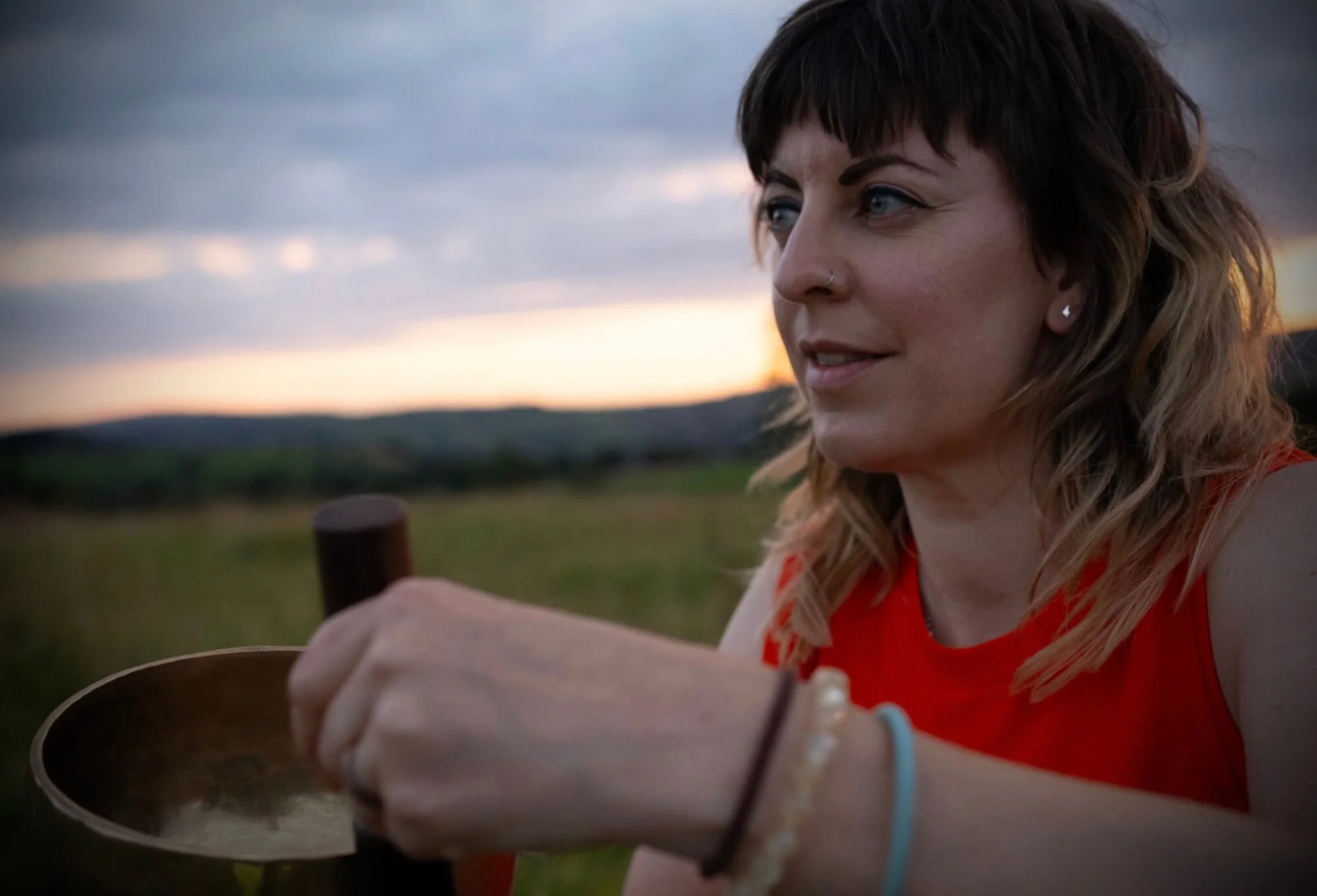
Clare Savory is an accredited sound therapist and meditation teacher, externally accredited by the British Academy of Sound Therapy (BAST) and the British School of Meditation (BSOM), where she graduated with Distinction. She has over twenty years of broadcasting experience, including work with the BBC and The Guardian.
Clare runs Feeling Sound — offering sound baths, guided meditation classes, and private Sonic Spa experiences in the Peak District and beyond. She's been meditating consistently for over a decade and brings both the science and the lived experience to everything she does.
Ways to work with Clare:
Sound baths in Glossop and Whaley Bridge | Private Sonic Spa Experiences | Recordings
Guided Meditation classes | Corporate wellbeing | Feeling Sound podcast | Meditation Music
Find everything at FeelingSound.co | Instagram & Facebook: @feelingsounddarkpeak