How To Be Less Stressed: 5 Things I Do To Relax
People often assume that because I run sound baths for a living, I must float through life permanently zen. I really don't. Here are the five ordinary, slightly unglamorous things I actually do every week to keep my own stress levels in check.

It's National Relaxation Day this week, which always makes me laugh a little, because relaxation isn't something I think you can switch on for one day a year.
It's built from small, repeated things, done on purpose, week after week, until your nervous system starts to expect them.
And - fun fact - some of you will notice I've been asking new people who come to our sound baths how they'd like to feel when they leave.
I'd say in 97.689% of cases (not at all scientific by the way), people write one word: relaxed.
So with that in mind, I've been busy creating new resources of tips, recordings and themes around 'relaxation'. This time - a share from me about the small things I do to help me ‘chill out’.
1. I spend time in the greenhouse with no agenda
Not gardening as a task to tick off, just pottering. Checking on things, watering, noticing what's grown since I last looked. There's something about tending to something slow and living that pulls me right out of my own head. It's the closest thing I have to a moving meditation, and it asks nothing of me except attention. There's real science behind this too, time spent on gentle, undemanding tasks like this lets your brain shift out of focused, effortful attention and into a softer kind of awareness, which lowers cortisol and gives your prefrontal cortex a genuine rest.

2. I practise violin badly, on purpose
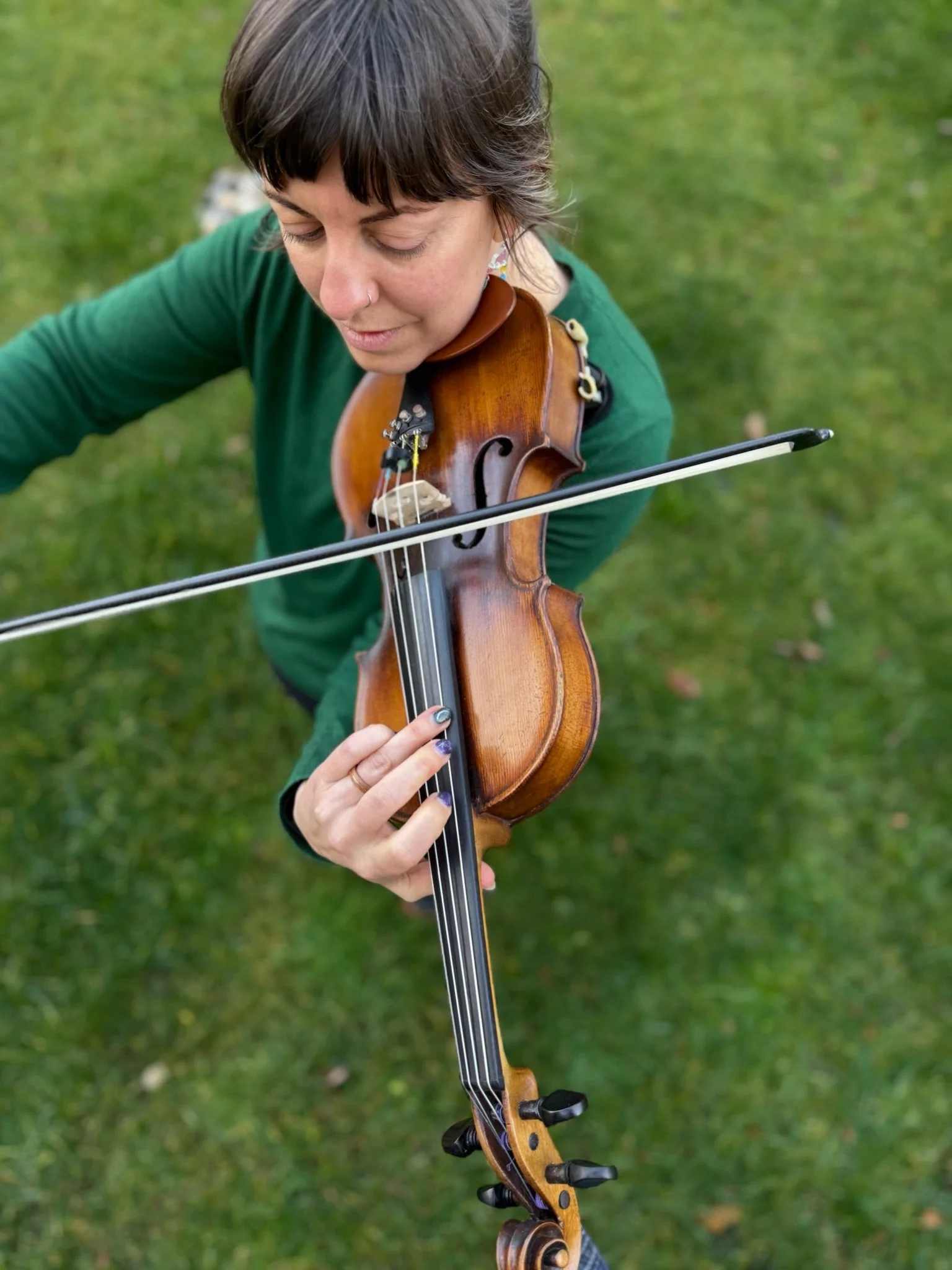
I'm Grade 8 and play in an orchestra, so you'd think practice would feel like more pressure, not less. But the practice that actually relaxes me is the bad kind, messing about, playing something just for the joy of the sound, not preparing for anything. It reconnects me to why I fell in love with music before any of it became about performance or precision. Playing without pressure like this tends to dial down activity in the amygdala, the brain's alarm system, while the coordination involved keeps both hemispheres talking to each other, which is part of why it feels so absorbing.
3. I move, even when I really don't want to
Some weeks this is a proper training run, building towards a half marathon I'll be doing on my birthday in a few weeks. Other weeks it's a slow, grumbling cycle around the block because I promised myself I would. Either way, it's rarely the activity itself that helps, it's the twenty minutes afterwards where my head feels noticeably quieter.
Movement like this gets your feel-good chemicals flowing (dopamine, endorphins) and helps burn off the stress hormones that build up over the day, which is really just a science-y way of saying it clears your head.
4. I protect a non-negotiable wind-down ritual
Most evenings, before bed, I do something quiet and screen-free, even if it's only ten minutes. Sometimes that's a few minutes of guided meditation, sometimes it's just lying down to a soundscape recording. The content matters less than the consistency, my body has come to recognise this little window as the signal that the day is ending, which makes actually switching off so much easier. Doing the same thing at the same time each night helps train your circadian rhythm, the internal clock that governs your sleep wake cycle, so your nervous system starts winding down before your head even hits the pillow.

5. I let myself do nothing, without guilt
This is the one that took me longest to learn, and the one I think most of us need permission for. An afternoon where I'm not optimising, producing, or ticking anything off. Just sitting. It still feels uncomfortable some weeks, but it's become a genuinely important part of my own nervous system regulation, proof to myself that my worth isn't tied to constant output. Unstructured rest like this activates what's known as the default mode network, the brain state linked to reflection, memory consolidation and creativity, which simply can't switch on properly while you're constantly busy or task focused.
None of these are dramatic. That's rather the point. Stress relief, real, lasting stress relief, tends to come from small, repeatable rituals rather than big occasional resets. If you're looking for somewhere to start, pick just one of these five and try it this week, even badly, even briefly. That's usually enough to begin shifting things.
Written by Clare Savory - feelingsound.co
Accredited by the British Academy of Sound Therapy and the British School of Meditation.
