When Something Feels Off
Where do you feel it first? In your mind? Your heart? Somewhere in your body that you can't quite name?
So many of us have that feeling - that low-level sense that something isn't quite right - and yet we push through. We knuckle down. We grit our teeth and keep going. That's what we're taught to do in a society that asks us to be more, do more, have more, earn more, achieve more.
But what if you had the tools to actually listen to those signals? And respond to them?

What if you had the tools to actually listen to those signals - and respond to them?
I had that feeling earlier today. My mind was jittery. All over the shop. I couldn't focus on one task at a time, and I knew something had been triggered - but I couldn't work out what it was with my thinking mind.
So I sat down for eleven minutes.
I followed my breath. Just that movement in and out - always there, no matter what else is happening. Underneath all the distraction and disrupted energy, I found what was actually going on.
There was sadness.
Something had reminded me of a feeling from years ago. I was anxious and nervous about an event later in the day, and I hadn't taken time to acknowledge that a lot of what I was carrying was fear - and a fair amount of comparatonitis.
As I meditated, tears slowly rolled down my face.
My Garmin showed my stress levels dropped by thirteen points.
My heart rate slowed.
My breathing slowed.
And when I opened my eyes eleven minutes later, I'd created enough space to finally see what had been happening beneath the surface.
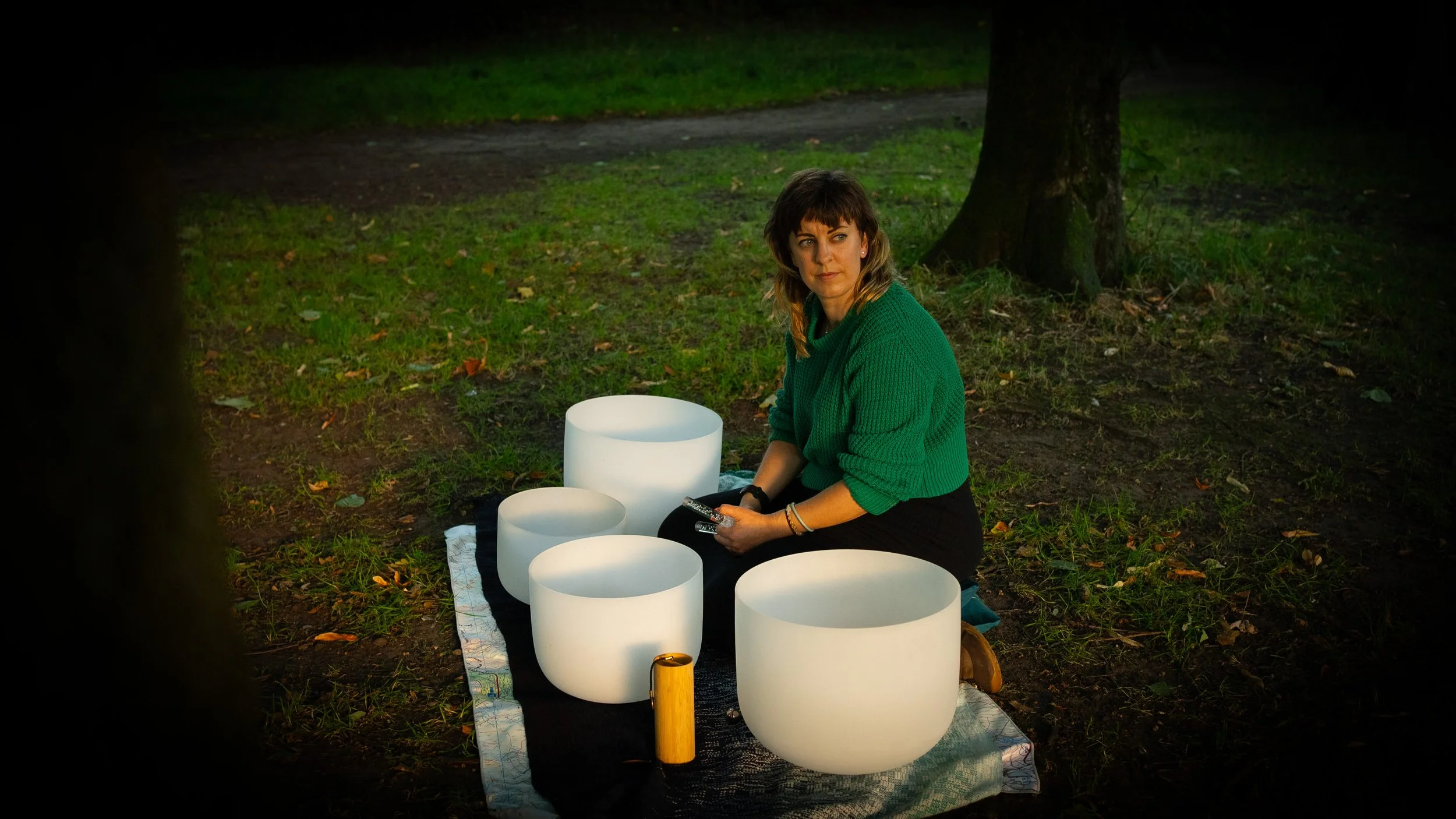
Want to try it yourself?
The technique I used today was a breathing meditation - the simplest possible starting point. Below you'll find three short recordings, each just three minutes long. They give you a taste of what it feels like to actually use these tools, rather than just read about them.
Finding a place to come back to ourselves
I wonder how many people have this. This skill. This knowledge of what to do when they feel off.
My quiet suspicion is - not many. Not because people don't want it, but because most of us don't know what it looks like in practice, or how to sit in the discomfort of learning to be with what is.
That's why I consider it my mission to help more people have these tools.
To know what they need - and to move intuitively toward it.
To regulate their nervous system. To switch into their parasympathetic state.
To acknowledge the whole multitude of emotions, sensations, and thoughts happening all at once, without feeling overwhelmed.
What does it feel like for you when something's off? Do you have a go-to, or is that still something you're figuring out?
I'm developing new online resources and courses launching this autumn, and I'm shaping them around what people actually need - not what I assume they need. If this hit home, drop me a comment or a message. I'm listening.
Written by Clare Savory - feelingsound.co
Accredited by the British Academy of Sound Therapy and the British School of Meditation.
